
How Will Brain-Computer Interfaces (BCIs) Shape Our Relationship with Technology?
- emtfmath
- Feb 24, 2024
- 2 min read
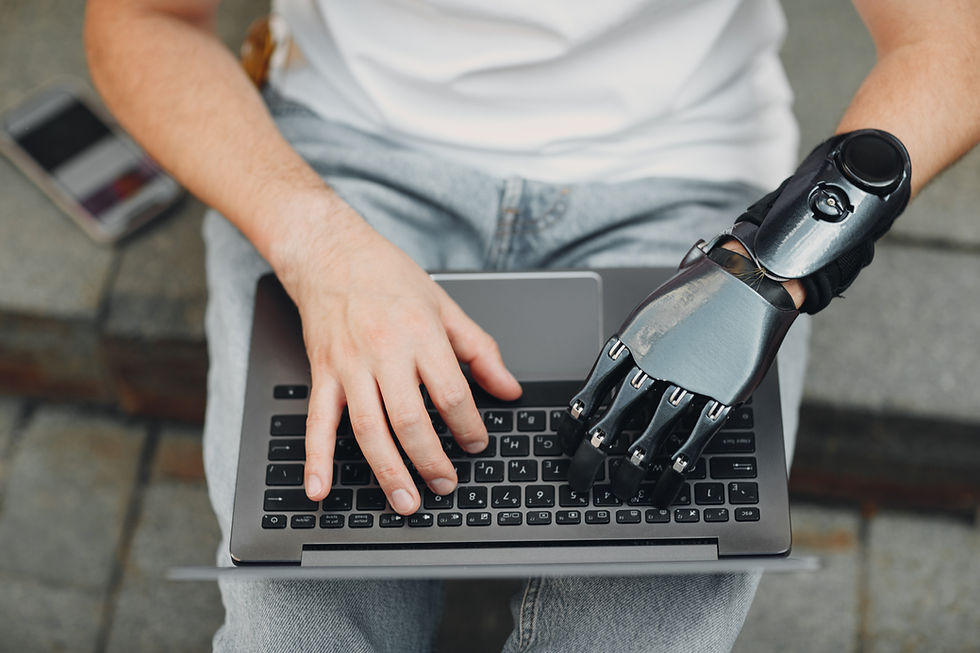
In the realm of technological innovation, few frontiers hold as much promise and potential for revolutionizing human-computer interaction as Brain-Computer Interfaces (BCIs). These remarkable systems, once relegated to the realm of science fiction, are rapidly emerging as a vital area of research, with implications that stretch far beyond the confines of traditional computing paradigms.
At its core, a Brain-Computer Interface is a direct communication pathway between the brain and an external device, bypassing conventional input methods such as keyboards or touchscreens. By harnessing the power of neural signals, BCIs enable users to control computers, prosthetic devices, and even smart home appliances with nothing more than their thoughts.
While the concept of mind-controlled technology may seem like something out of a futuristic fantasy, recent advancements in neuroscience, signal processing, and machine learning have brought this once speculative idea tantalizingly close to reality. Researchers around the globe are making significant strides in developing BCIs that are not only more accurate and reliable but also more accessible to a wider range of users.
One of the most exciting applications of BCIs lies in the field of assistive technology, where these systems hold the potential to transform the lives of individuals with disabilities. For people living with paralysis or motor impairments, BCIs offer a newfound sense of independence and autonomy, allowing them to interact with the world around them in ways that were previously unimaginable.
Moreover, BCIs are poised to revolutionize healthcare by providing unprecedented insights into the inner workings of the human brain. Researchers are leveraging these systems to study neurological disorders, monitor brain activity during surgery, and even develop new treatments for conditions such as epilepsy, Parkinson's disease, and depression.

But perhaps the most profound impact of BCIs lies in their ability to unlock the mysteries of the human mind itself. By decoding neural signals and mapping patterns of brain activity, scientists are gaining new insights into how we think, learn, and perceive the world around us. This deeper understanding of the brain has far-reaching implications for fields as diverse as education, psychology, and artificial intelligence.
As we stand on the cusp of a new era in human-computer interaction, the importance of BCI research has never been clearer. With each breakthrough and discovery, we inch closer to a future where technology seamlessly integrates with the human experience, enhancing our capabilities, and enriching our lives in ways we are only beginning to imagine.
In the years to come, the continued advancement of Brain-Computer Interfaces will undoubtedly shape the course of technology and human society, ushering in a new era of innovation, discovery, and possibility.
So, as we look ahead to the future, let us embrace the boundless potential of BCIs and the transformative impact they hold for us all. The journey towards a world where mind and machine are seamlessly intertwined has only just begun, and the possibilities are truly limitless.
What is your perspective?
Let me know your thoughts in a comment below!


Comments